Hana Ward
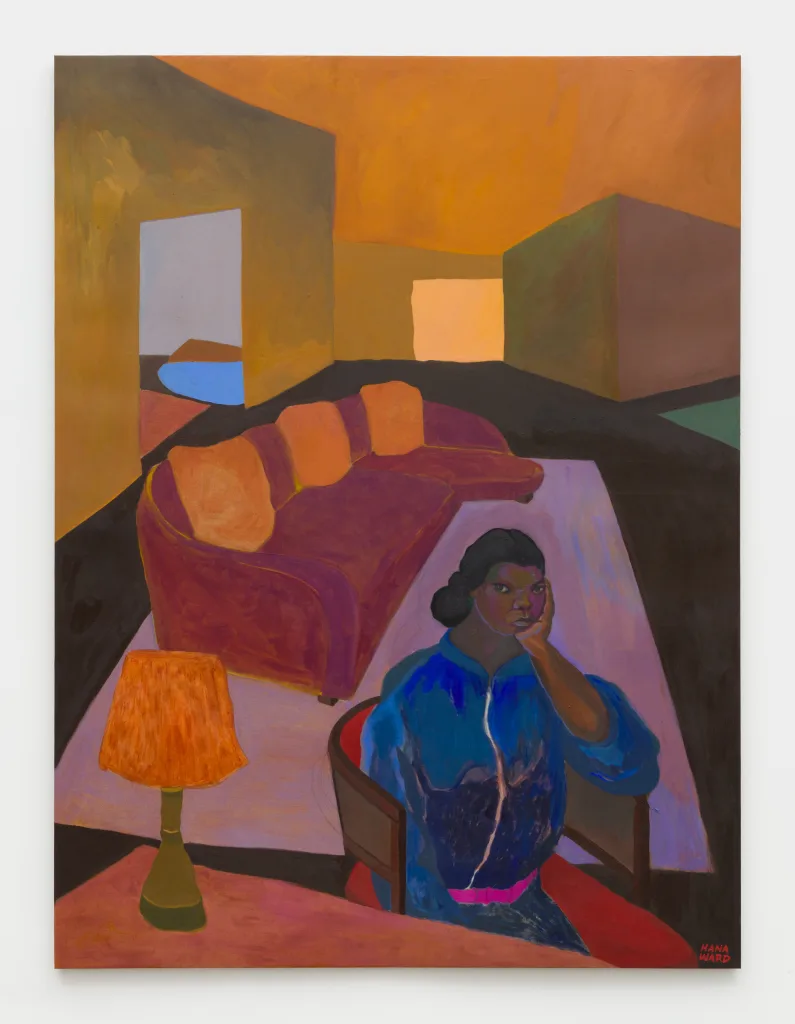
The Mortgage Lifter (a different furnishing), 2024
The Mortgage Lifter (a different furnishing) (2024) references one of the cowpea's many nicknames, bestowed upon the legume because of the improvements the crop would make to the soil and thus a farmer’s yield. Reflecting on the histories of sharecropping, considering the ground as a shelter against oppression, and the evolution of consciousness experienced by the recently emancipated, Hana Ward offers these thoughts: “I was painting this indoor scene and thinking about mortgages, thinking about this woman being in her home, perhaps acquired after improving her financial situation. I was also reading about sharecropping in the US and South Africa and thinking about the ‘furnish’ landowners would often supply the sharecropper who had no collateral to provide, in exchange for a lien on the next year's crop. Often, this practice led to a cycle of debt. The title of this painting plays on the word ‘furnish,’ shifting its association from the crop-lien system instead to one's own personal furnished home. The painting symbolizes breaking free from this system, where instead of being trapped in an endless cycle of landlessness, debt and poverty, the figure owns her land.” “Because a lot of my work relates to our relationship to the land, I've found myself seeking to know more about our relationship to the land through various periods of time. For example, after Emancipation, a new system of farming called sharecropping was established, which ‘was to characterize the rural South for the next 70 years and contribute decisively to the structure of race and labor relations and the pace of economic change in the region.’ 1 Because I am interested in empowerment and its psychic tools (mentalities, thoughts and beliefs, and one's imaginative power), I was also interested in the moment of the construction of sharecropping because of the intentional effort to strip Black folks of their newly acquired autonomy. What started as a moment of potential for possible collaboration—landless former slaves reluctantly coming together with labor-hungry white landowners to farm the land for a share of the crop produced—devolves and becomes increasingly oppressive and regressive. The independence and autonomy being developed by the Black sharecroppers in the South ‘fostered an unwelcome sense of partnership’ that concerned landowners with taking control of labor and reestablishing white supremacy by stripping sharecroppers’ autonomy.”
Inquire